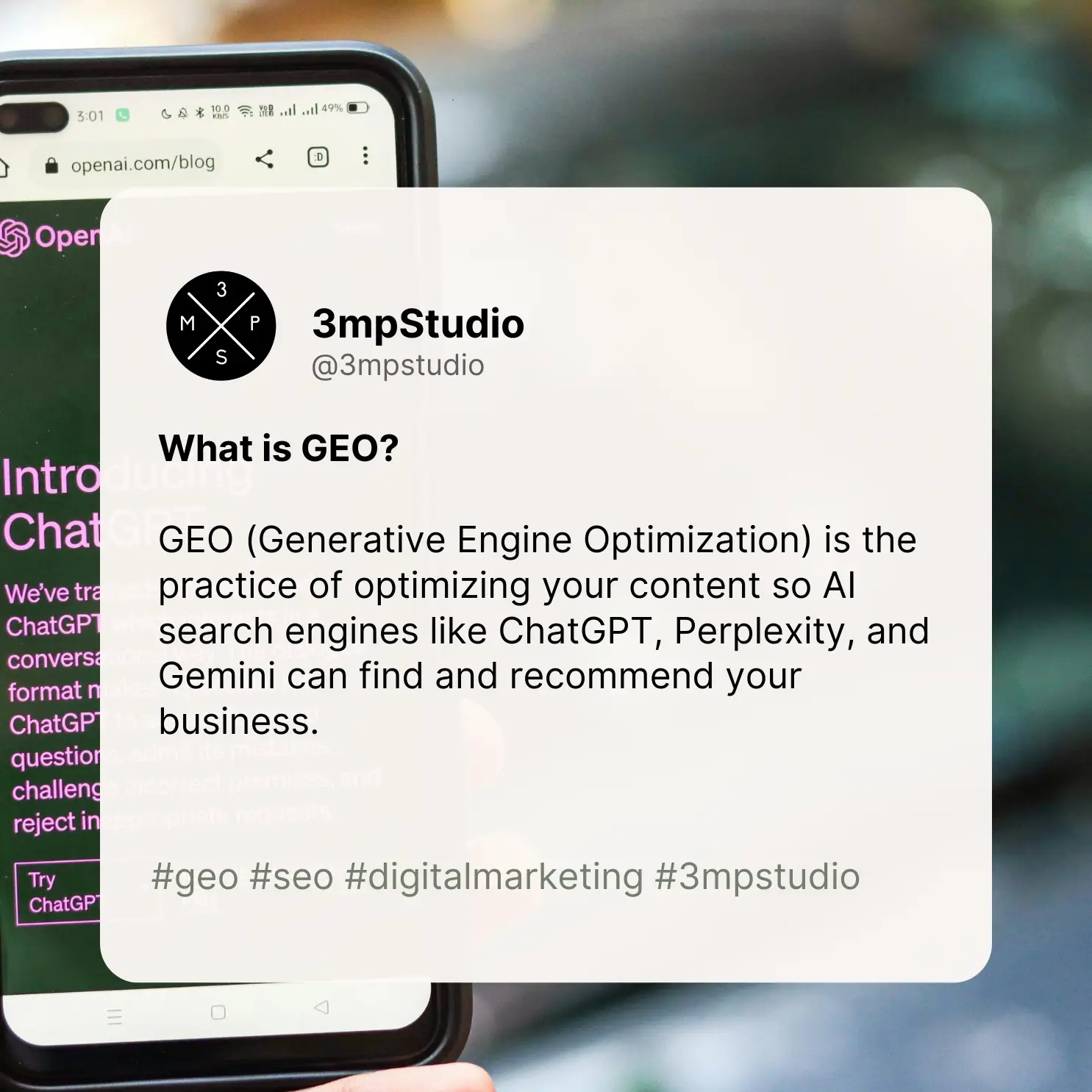
The way people find information online is changing fast. Traditional search engines like Google aren’t going away, but AI-powered tools—like ChatGPT, Perplexity, and Google’s AI Overviews—are quickly becoming part of how users discover answers, products, and services.
So, how can your website stay ahead in this AI-powered search world?
Let’s break it down.
1. Understand the Shift from Search Engines to Generative Engines
Search engines crawl and rank your site based on keywords, backlinks, and technical SEO. Generative engines, however, focus on trustworthy, contextual answers they can use to respond directly to users’ questions.
👉 What this means: Your content needs to be more than keyword-optimized—it must be clear, fact-based, and useful enough that AI can pull from it confidently.
2. Strengthen Your SEO Foundation
Even in an AI-driven world, SEO is far from dead. In fact, it’s the foundation for GEO (Generative Engine Optimization).
-
Ensure fast loading speeds (Core Web Vitals still matter).
-
Structure content with headers, bullet points, and schema markup.
-
Optimize for mobile-first users.
-
Create content around questions people ask (FAQ-style posts, “how-to” guides).
👉 Bottom line: A strong SEO presence signals credibility not just to Google, but also to AI platforms sourcing data.
3. Create Content Designed for Humans and AI
AI engines are trained to deliver helpful, concise, and trustworthy answers. If your content is bloated or vague, it won’t be chosen.
-
Write in plain language that answers questions directly.
-
Provide supporting facts, stats, or sources.
-
Focus on E-E-A-T (Experience, Expertise, Authoritativeness, Trustworthiness).
-
Include your brand voice—AI can recognize authenticity.
👉 Pro tip: Instead of writing a 2,000-word article stuffed with keywords, try crafting clear answers in under 100 words for key sections.
4. Optimize for GEO (Generative Engine Optimization)
GEO is the new frontier. It’s about making your website “AI-friendly.”
Practical steps:
-
Publish content that answers customer questions directly.
-
Use structured data so AI can easily “understand” your site.
-
Keep your brand messaging consistent across your website, social media, and directories.
-
Monitor where your business is mentioned online—AI engines often pull from multiple sources.
5. Build a Brand AI Wants to Recommend
AI isn’t just looking for answers—it’s looking for trusted brands to cite. Future-proof your site by investing in brand authority:
-
Collect and display reviews/testimonials.
-
Be active in your niche (guest blogs, podcasts, industry discussions).
-
Build thought-leadership content that shows expertise.
👉 Remember: AI engines mimic human trust signals. If people trust your brand, AI will too.
6. Stay Agile and Evolve with AI
The AI search landscape is still evolving. What works today might shift in a year. Keep your website strategy flexible:
-
Regularly update old content with fresh info.
-
Test new formats (video, audio, Q&A blogs).
-
Track how AI-powered search engines are citing your content.
Final Thoughts
AI is transforming how users find information—but businesses that adapt early will win. Future-proofing your website isn’t about abandoning SEO; it’s about layering GEO strategies on top of it to ensure you show up in both traditional search and AI-powered engines.
Your next step? Review your website today and ask: “If an AI were answering a customer’s question, would my site be the best source?”
✨ At 3mpStudio, we help service businesses bridge the gap between design and SEO—now with an eye toward the future of GEO. If you’d like to talk about how to make your site AI-ready, get in touch here.

As a Web Producer, I possess a diverse skill set that includes web design, graphics, marketing, software integration, and SEO. What I find fulfilling about my role is collaborating with fellow innovative marketers and assisting business owners and organizations in optimizing their digital footprint.